Underground excavations in Blackpool encompass a broad range of engineering activities that involve the creation of voids, passages, or chambers beneath the ground surface. This category is far from monolithic, extending from the mechanised boring of tunnels through water-bearing soils to the careful benching of deep shafts and basements in dense urban settings. For a coastal town like Blackpool, where the built environment sits atop complex Quaternary deposits, the importance of robust underground excavation practice cannot be overstated. It directly underpins the viability of infrastructure upgrades, coastal defence schemes, and the regeneration of the town’s historic core, ensuring that development can proceed without compromising the stability of adjacent structures or triggering ground collapse.
Blackpool’s subsurface presents a particularly challenging geological profile that demands specialist knowledge. The town is underlain by a thick sequence of glacial till, sands, and gravels, overlying the Sherwood Sandstone Group and, in turn, the deeper Mercia Mudstone. The near-surface deposits are often soft, highly variable, and critically, water-charged due to the high water table influenced by the proximity of the Irish Sea. This combination creates classic ‘soft ground’ conditions where running sands and silts are a constant hazard during excavation. Any underground work here must contend with the risk of hydraulic uplift in deep excavations and the potential for tunnelling-induced settlement to damage Blackpool’s iconic Victorian frontages and piers, making a thorough geotechnical analysis for soft soil tunnels an absolute prerequisite.
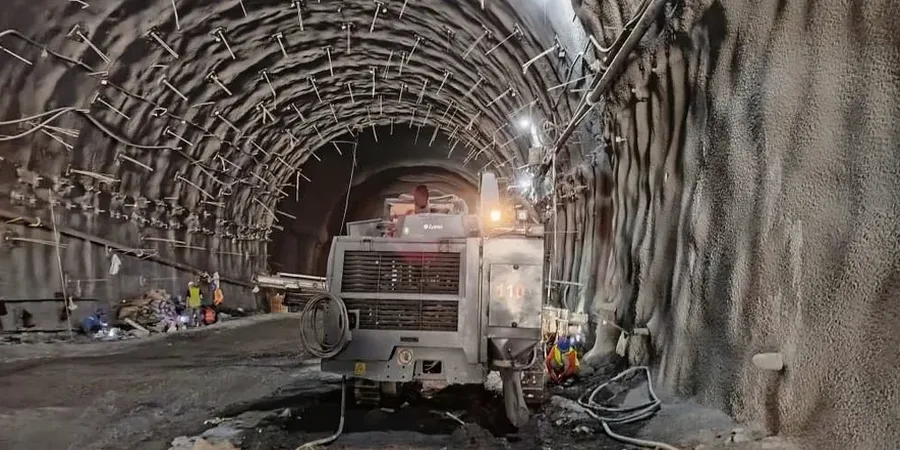
The regulatory framework governing underground excavations in the UK is stringent and directly applicable to all projects in Blackpool. The Construction (Design and Management) Regulations 2015 (CDM 2015) place a statutory duty on clients, designers, and contractors to manage health and safety risks. Crucially, for temporary works such as deep excavations, the British Standard BS 5975:2019 provides the authoritative code of practice for the procedural control of temporary works, including the critical role of a Temporary Works Coordinator. For tunnelling, adherence to the Specification for Tunnelling (British Tunnelling Society) and the requirements of the Health and Safety Executive’s guide to the avoidance of underground services (HSG47) are mandatory. These standards mandate a rigorous, iterative design process where geotechnical design of deep excavations must be validated by observational methods and continuous monitoring during construction.
The types of projects in Blackpool that necessitate this category of expertise are diverse. The most prominent include the installation of deep drainage and combined sewer overflows to improve bathing water quality along the Fylde Coast, a major infrastructure drive requiring shafts and connecting tunnels. The construction of multi-storey basements beneath new hotel and leisure developments on the Promenade demands deep, often contiguous, piled retaining walls. Furthermore, the ongoing maintenance and upgrade of sea outfalls and the potential for future utility tunnels to reduce surface disruption are key applications. Every one of these projects, regardless of scale, relies on a single, non-negotiable truth: the ground behaviour must be tracked in real-time through a programme of geotechnical excavation monitoring, using instruments like inclinometers, piezometers, and settlement markers to validate design assumptions and trigger pre-defined contingency actions.
FAQ
What is the primary geotechnical risk when undertaking underground excavations in Blackpool?
The dominant risk is working within soft, water-saturated glacial and alluvial soils. The high groundwater table, influenced by the sea, frequently leads to running sand conditions and base instability in deep excavations. Uncontrolled water ingress can cause rapid erosion, ground loss, and settlement damage to adjacent structures, demanding rigorous dewatering or exclusion techniques and constant monitoring.
Which UK standards govern the design of temporary support for deep excavations?
The design of temporary works, including propping and shoring for deep excavations, is governed by BS 5975:2019. This standard outlines the procedural controls needed to manage all temporary works safely. It stipulates the duties of a Temporary Works Coordinator and requires that designs account for all foreseeable load cases, with a particular emphasis on geotechnical observational methods as described in CIRIA guidance.
How is the impact of tunnelling on Blackpool’s historic buildings typically assessed and managed?
Impact assessment begins with a detailed Phase 2 ground investigation and a structural condition survey of all assets within the predicted settlement trough. A staged, conservative analysis then estimates ground movement and building strain. During construction, an extensive array of real-time monitoring instruments—such as precise levelling points, tilt meters, and crack gauges—is deployed to validate predictions and trigger mitigation measures if movement approaches pre-defined threshold limits.
What site investigation techniques are essential before designing an underground excavation in coastal conditions?
A comprehensive investigation must combine boreholes with in-situ testing like cone penetration tests and Standard Penetration Tests to characterise the soft soils. Crucially, the installation of standpipe or vibrating wire piezometers is essential to establish the true groundwater profile and tidal influence. Laboratory testing for particle size distribution, permeability, and undrained shear strength directly informs the excavation design and the necessity for ground treatment.