Ground investigation in Blackpool forms the essential first step for any construction or civil engineering project, providing a detailed understanding of the subsurface conditions that will directly influence design, safety, and long-term performance. This category encompasses a comprehensive range of intrusive and non-intrusive techniques used to assess soil, rock, groundwater, and potential contamination across a site. In a coastal town like Blackpool, where the legacy of glacial deposits, alluvial soils, and man-made ground interacts with a dynamic water table, a robust investigation is not merely a regulatory box to tick but a fundamental necessity for mitigating risk. Whether you're planning a residential extension, a commercial development along the Promenade, or infrastructure upgrades, the data gathered here informs foundation design, earthworks strategies, and environmental management plans, ensuring projects are both viable and durable against the challenges posed by the local geology.
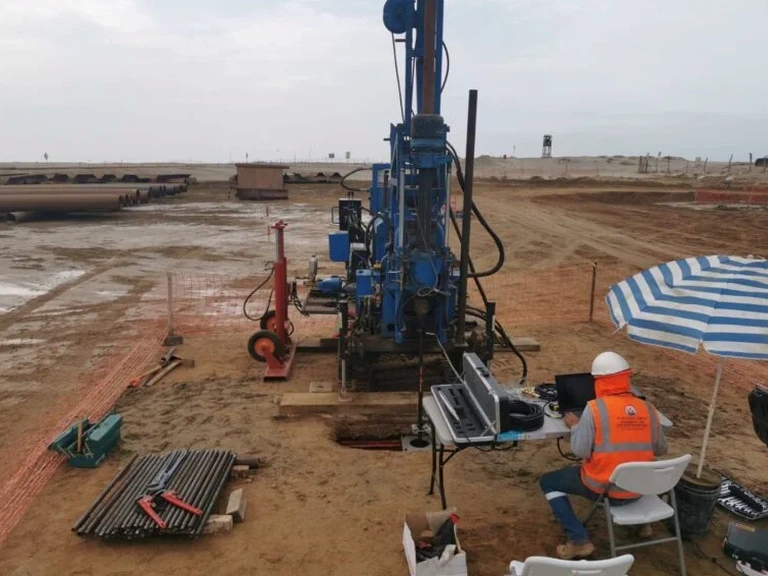
Blackpool's geological setting is dominated by Quaternary superficial deposits overlying the Triassic Mercia Mudstone Group and Sherwood Sandstone. The superficial layer is particularly critical, comprising thick sequences of glacial till, glaciofluvial sands and gravels, and extensive areas of soft alluvium and peat along the low-lying coastal plain. These deposits can be highly variable over short distances, leading to potential issues such as differential settlement, poor bearing capacity, and the presence of aggressive ground chemistry, including sulfates that can attack buried concrete. Furthermore, significant parts of the town are underlain by made ground, a legacy of its rapid Victorian expansion and industrial past, which can contain obstructions, voids, or contaminants. A crucial technique for navigating these complex shallow soils is the Cone Penetration Test, which provides a continuous profile of soil resistance and is particularly effective in the soft alluvium and sands found beneath Blackpool, helping to delineate weak zones and inform pile design with precision.
The regulatory framework governing ground investigation in the UK is stringent, with British Standard BS 5930:2015+A1:2020 providing the definitive code of practice for site investigation. This standard outlines the planning, execution, and reporting requirements for all types of investigation work, ensuring a consistent and high-quality approach. In Blackpool, this is supplemented by the requirements of the Building Regulations 2010, specifically Approved Document A (Structure), which mandates that foundations are designed based on an adequate understanding of ground conditions. For projects involving land potentially affected by contamination, the Environment Agency's Land Contamination Risk Management (LCRM) guidance is paramount, requiring a phased approach to risk assessment that begins with a thorough desk study and intrusive investigation. Compliance with these national standards is typically enforced through the planning process, with Blackpool Council's local validation checklists requiring developers to submit a Phase 1 Preliminary Risk Assessment and, where necessary, a Phase 2 Intrusive Investigation report before conditions can be discharged.
The requirement for a comprehensive ground investigation spans a wide spectrum of project types across the Fylde coast. Major commercial ventures, such as the Blackpool Central leisure development and hotel constructions along the seafront, demand deep investigations to manage the high structural loads and the challenges of building on sand dunes and marine deposits. Residential developments, from single dwellings to large housing estates, rely on investigations to satisfy warranty providers like NHBC and to design cost-effective foundations, often using the data from a Cone Penetration Test to optimise pile lengths and avoid over-engineering. Infrastructure projects, including the upgrade of sea defences, highway improvements, and the installation of sustainable drainage systems (SuDS), also depend on accurate ground models to ensure stability and functionality. Even smaller-scale projects, such as retaining walls or basement constructions, trigger the need for targeted investigation to prevent costly surprises during excavation and to guarantee the safety of adjacent structures.
Available services
FAQ
What is the purpose of a ground investigation in Blackpool?
A ground investigation identifies the soil, rock, and groundwater conditions beneath a site to inform safe and economic design. In Blackpool, it is vital for assessing variable superficial deposits like glacial till, alluvium, and peat, along with made ground, to manage risks such as differential settlement, low bearing capacity, and aggressive ground chemistry that can affect foundations and buried concrete.
When is a ground investigation required by UK regulations?
A ground investigation is required whenever a proposed development may be affected by ground conditions, as mandated by the Building Regulations 2010 (Approved Document A) and enforced through planning conditions. BS 5930:2015+A1:2020 provides the code of practice, and Blackpool Council's validation checklists typically require a Phase 1 desk study and, where risks are identified, a Phase 2 intrusive investigation report.
What types of testing are typically included in a Blackpool ground investigation?
A typical investigation in Blackpool combines intrusive and in-situ methods. This includes cable percussive or rotary drilled boreholes for sampling and in-situ testing, trial pits for shallow visual inspection, and geotechnical tests like the Cone Penetration Test (CPT) for continuous profiling in soft soils. Laboratory analysis on recovered samples assesses strength, compressibility, and chemical aggressiveness to complete the ground model.
How long does a ground investigation take to complete on site?
The duration of fieldwork depends entirely on the project's scale and complexity. A simple residential investigation using a few dynamic probes or a light CPT rig may be completed in a single day, while a major commercial project requiring multiple deep boreholes, comprehensive CPT soundings, and trial pits can extend over several weeks. The subsequent laboratory testing and reporting phase adds additional time to the programme.