Blackpool's coastline isn't just about the pleasure beach and the tower, the ground beneath it tells a story of glacial deposits and constant marine erosion. The boulder clay cliffs from Bispham to North Shore and the softer sands further south create very different slope stability challenges, and that matters the moment you plan any excavation or foundation near a gradient. A proper slope stability analysis here has to account for the 12-metre tidal range and how pore water pressure builds up in those silty layers after a week of Lancashire rain. We run these assessments combining site-specific data with CPT testing to map weak zones without disturbing the sample, and test pits when we need a direct look at the fill material behind old sea walls.
Blackpool's boulder clay can lose up to 40% of its shear strength when fully saturated, turning a stable slope into a failure risk within a single wet season.
Our approach and scope
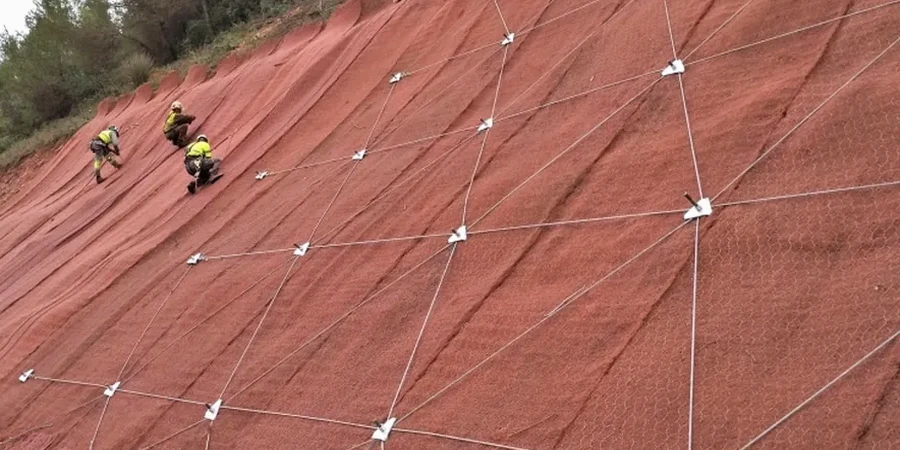
Local geotechnical context
Last year we reviewed a scheme on the cliffs near Bispham where a developer wanted to place a three-storey apartment block just 4 metres back from the crest. The initial SI had assumed a simple drained condition, but our slope stability analysis showed that a 1-in-10-year rainfall event would drop the factor of safety from 1.6 down to 0.95, well below the 1.3 minimum. The contractor had to redesign the retaining structure and install horizontal drains to relieve pore pressure before the planning authority would sign off. That is the real cost of underestimating slope risk: not just construction delays, but a design that fails the building control check. Coastal erosion is relentless here; the Marine Management Organisation keeps a close watch, and so should anyone investing in Blackpool's shoreline developments.
Relevant standards
Eurocode 7 (BS EN 1997-1:2004), BS 5930:2015+A1:2020 (Code of practice for ground investigations), CIRIA C580 (Embedded retaining walls), NHBC Standards Chapter 4.2 (Building near trees)
Complementary services
Ground investigation for slope assessment
Rotary core drilling through glacial till with SPTs and U100 sampling, plus installation of standpipe piezometers to monitor groundwater levels over several tidal cycles before running the stability model.
Stabilisation design review
Independent check of retaining wall and slope reinforcement designs including soil nailing, ground anchors, and toe berms, verified against the site-specific shear strength parameters from the lab programme.
Typical parameters
FAQ
What does a slope stability analysis for a Blackpool site typically cost?
For a single slope cross-section with site investigation data already available, the analysis runs from £960 to £2,100 depending on the complexity of the ground model. If we need to run the full SI campaign including drilling, lab testing, and installation of piezometers, the combined package ranges from £2,800 to £3,560. Each site is different though—the presence of made ground or proximity to the high-water mark can increase the fieldwork scope.
How long does the assessment take from start to finish?
A desktop study and preliminary modelling can be turned around in 5 to 8 working days. If field investigation is required, budget for 3 to 4 weeks total, allowing time for lab testing of the till samples—the consolidation stage in the triaxial cell alone takes a minimum of 5 days per specimen to follow BS 1377 procedures properly.
Do I need a slope stability analysis for a small rear garden extension near a slope?
If the slope is steeper than 1:3 (about 18 degrees) and the excavation comes within 6 metres of the crest, building control will almost certainly ask for a stability check. We have done quite a few of these for terraced houses in the North Shore area where gardens back onto the old cliff line, and in most cases a simple infinite slope model is sufficient to satisfy the planning condition.
What is the difference between drained and undrained analysis for Blackpool's glacial till?
Glacial till is a low-permeability material, so short-term loading during construction should be analysed in undrained conditions using total stress parameters (cu from triaxial UU tests). Long-term stability, which is critical for permanent slopes, must use effective stress parameters (c' and phi') with the highest anticipated groundwater level. The boulder clay in Blackpool typically gives phi' values between 27 and 33 degrees depending on the gravel content.
Can you model the effect of tree roots on slope stability?
Yes, vegetation surcharge and root reinforcement can be included in the model. More importantly, we assess the desiccation effect of mature trees on the till—removing a large sycamore near a slope crest can trigger a delayed failure as the soil rehydrates and loses the suction that was previously holding it together. NHBC Chapter 4.2 gives guidance on foundation depths near trees, and we incorporate that into the slope analysis where applicable.