Ground improvement encompasses a suite of geotechnical techniques designed to enhance the engineering properties of soils and fills, transforming weak or compressible ground into a reliable foundation medium. In Blackpool, this discipline is not merely a construction option but a fundamental necessity, driven by the town's complex geological legacy and the pressing demands of urban regeneration. From stabilising the shifting sands beneath Victorian promenades to preparing brownfield sites for modern housing, ground improvement mitigates risks such as excessive settlement, bearing capacity failure, and liquefaction, ensuring the long-term stability and safety of structures. The category covers a strategic, design-led approach where site-specific conditions dictate the optimal method, whether through densification, reinforcement, or drainage.
Blackpool's subsurface is dominated by a varied sequence of Quaternary deposits overlying Triassic Mercia Mudstone. The critical challenge lies in the extensive blankets of wind-blown sand forming the coastal dune system, underlain by glacial till and pockets of soft alluvium and peat in low-lying inland areas. These granular soils can be loose and unconsolidated, posing a high risk of dynamic compaction under load, while the organic lenses are highly compressible. The shallow groundwater table, influenced by the Irish Sea, further complicates construction, demanding solutions that function effectively in saturated conditions. This intricate ground profile means a one-size-fits-all foundation approach is rarely viable, making specialist ground improvement the cornerstone of viable development.
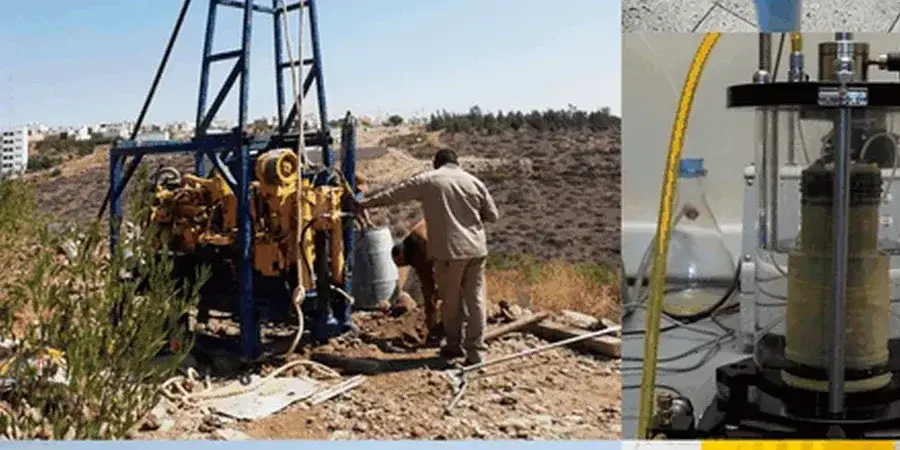
All ground improvement design and execution in the UK must adhere to the rigorous framework of Eurocode 7 (BS EN 1997) for geotechnical design, which mandates a limit state design philosophy. This is complemented by the execution standards within BS EN 14731 for deep vibration techniques and BS EN 15237 for vertical drainage. The specification for ground treatment is further detailed in the UK National Annexes and the comprehensive guidance of the Institution of Civil Engineers' Specification for Ground Treatment. These documents place a heavy emphasis on thorough site investigation to BS 5930, design validation through field trials, and performance monitoring via post-treatment testing, such as cone penetration tests (CPT) and zone load tests, ensuring that the improved ground meets strict serviceability and ultimate limit state criteria.
The types of projects requiring ground improvement in Blackpool are diverse and critical to the town's future. Coastal defence upgrades and the reinforcement of sea walls demand robust, erosion-resistant ground to withstand wave action and tidal forces. The regeneration of derelict seafront hotels and piers often involves working over loose, hydraulically placed fills. For these scenarios, vibrocompaction design offers a deep densification solution that significantly increases the relative density of granular soils, reducing the potential for settlement. Similarly, the construction of new commercial and residential blocks on sites with deeper soft spots or where load transfer to a firmer stratum is required benefits from stone column design, which creates stiff, draining inclusions that reinforce the soil mass. Infrastructure projects, including road widening and the installation of large-diameter drainage culverts through compressible ground, also rely heavily on these techniques to prevent differential settlement.
Available services
FAQ
What are the main benefits of ground improvement over traditional deep foundations like piling?
Ground improvement often provides a more sustainable and cost-effective solution by treating the soil mass in situ, rather than bypassing it. It can be faster to execute, uses less concrete and steel, and reduces spoil removal. For sites with variable ground, methods like vibro stone columns can also create a homogeneous, drained foundation, mitigating differential settlement and liquefaction risks across a wider area than isolated piles.
How do I know which ground improvement technique is right for my Blackpool site?
The selection depends entirely on the findings of a detailed ground investigation to BS 5930. Key factors include the soil type, its density or consistency, groundwater levels, and the loads from the proposed structure. In Blackpool's loose sands, vibrocompaction is often ideal, whereas for softer cohesive soils or mixed ground, stone columns are frequently specified. A thorough design process, including field trials, is essential.
What are the key UK regulations and standards governing ground improvement works?
The primary design standard is Eurocode 7 (BS EN 1997), which requires a transparent design based on limit states. Execution must comply with specific standards like BS EN 14731 for deep vibration work. The ICE Specification for Ground Treatment provides the contractual and technical framework, demanding rigorous validation. Planning consent and building regulations approval will also require geotechnical certification demonstrating the adequacy of the proposed solution.
Is ground improvement a permanent solution, and how is its long-term performance verified?
Yes, when properly designed and executed, ground improvement is a permanent engineering solution. The design life is typically 50-120 years, matching the structure it supports. Long-term performance is verified at the outset through rigorous post-construction testing, such as CPTs and load tests, which confirm the design parameters have been met. The improved ground then functions as a homogeneous, engineered mass with predictable long-term behaviour.