In-situ testing forms the backbone of reliable geotechnical investigation across Blackpool, providing engineers with direct measurements of ground conditions without the disturbance associated with sampling and laboratory work. This category encompasses a range of field-based procedures designed to assess soil strength, density, permeability and deformation characteristics in their natural state. For a coastal town like Blackpool, where the built environment ranges from Victorian sea-front structures to modern residential estates, understanding the actual behaviour of the ground is critical. The data gathered through these tests informs foundation design, earthworks specifications and retaining wall analysis, ensuring that new developments and refurbishments alike are founded on sound engineering judgement rather than conservative assumptions.
Blackpool’s geology presents a varied profile that demands a flexible approach to site investigation. The promenade and immediate coastal strip are underlain by Quaternary wind-blown sand deposits and marine alluvium, which can be loose, variable in density and potentially liquefiable. Moving inland, glacial till of the Devensian period dominates, often comprising a stiff sandy clay matrix with cobbles and boulders that can challenge penetration-based testing. Beneath these superficial layers, the Triassic Sherwood Sandstone Group forms the bedrock, though its depth and weathering grade vary considerably across the Fylde peninsula. The high water table in many areas, particularly near the seafront and in low-lying inland zones, adds complexity to any testing programme and makes in-situ permeability and pore pressure measurement essential for safe design.
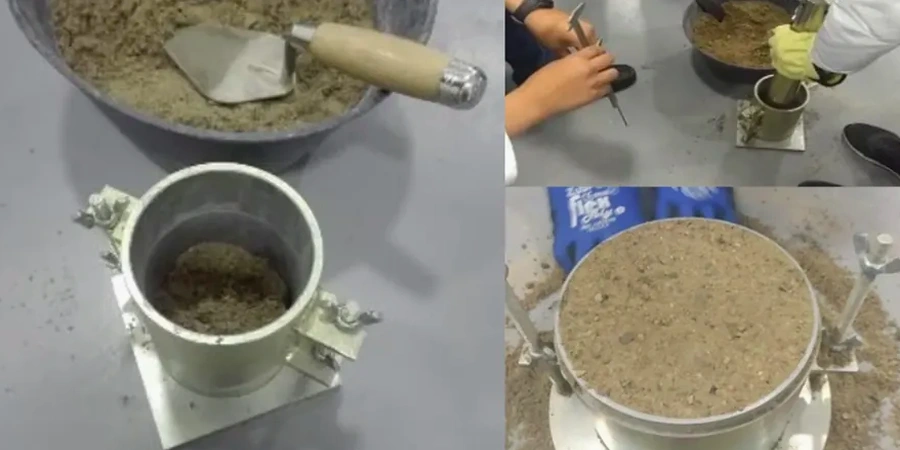
All in-situ testing carried out in Blackpool must comply with the relevant British Standards and Eurocodes adopted in the UK. The primary framework is BS EN 1997-2:2007 (Eurocode 7 – Geotechnical design – Ground investigation and testing), supported by the UK National Annex. Specific test methods follow their own standards: for instance, field density test (sand cone method) is typically conducted in accordance with BS 1377-9 or the withdrawn but still referenced BS 1924-2 for stabilised materials. Dynamic probing follows BS EN ISO 22476-2, while standard penetration tests (SPT) align with BS EN ISO 22476-3. Contractors and consultants must also be mindful of the Construction (Design and Management) Regulations 2015, which place duties on all parties to manage health and safety risks during ground investigation, particularly when dealing with buried services or contaminated land that can be encountered on brownfield sites across the town.
The types of projects requiring in-situ testing in Blackpool are diverse. Large-scale infrastructure such as the Talbot Gateway regeneration scheme and sea defence improvements along the Fylde coast rely heavily on field data to validate design assumptions. Residential developments on former industrial land, common in the inner wards, demand thorough investigation to assess compaction levels and identify any zones of poor ground. Even smaller projects like house extensions or the installation of a domestic wind turbine can benefit from targeted in-situ density or strength testing, particularly where the ground conditions are suspected to be marginal. The town’s ongoing investment in tourism facilities, including the Blackpool Central leisure development, further underlines the need for robust geotechnical data to support complex foundation solutions and underground structures.
Available services
FAQ
What is in-situ testing and why is it preferred over laboratory testing in Blackpool?
In-situ testing measures soil properties directly in the ground, avoiding the disturbance that occurs during sampling, transport and preparation for laboratory tests. In Blackpool, where loose sands and soft alluvial deposits are common, disturbance can significantly alter density and strength values. Field tests like the cone penetration test or sand cone density method provide a more representative picture of how the ground will actually behave under load, leading to more efficient foundation designs.
Which in-situ tests are most appropriate for Blackpool's sandy coastal soils?
For the wind-blown sands and marine deposits along the coast, dynamic probing and cone penetration tests are particularly useful because they provide continuous profiles of relative density and can identify loose zones susceptible to settlement or liquefaction. The field density test (sand cone method) is also widely used on compacted sand fills to verify that specified compaction levels have been achieved during earthworks and sea defence construction.
What British Standards govern in-situ testing procedures in the UK?
The overarching standard is BS EN 1997-2:2007 (Eurocode 7, Part 2), which sets out the principles for ground investigation. Individual test methods have their own standards: SPT follows BS EN ISO 22476-3, dynamic probing BS EN ISO 22476-2, and field density tests typically reference BS 1377-9. All testing must also comply with the UK National Annex to Eurocode 7 and relevant health and safety legislation such as CDM 2015.
When is in-situ testing required for a construction project in Blackpool?
In-situ testing is required for virtually any project where the ground will support structural loads or where earthworks are planned. This includes new-build housing, commercial developments like those in the Talbot Gateway, sea defences, road construction and even smaller projects such as retaining walls or extensions on marginal ground. The scope of testing is typically defined by the designer based on the geotechnical complexity of the site and the consequences of failure.