The Fylde coast presents a unique challenge for foundation engineering: thick sequences of loose, water-saturated sands deposited during the last glacial retreat. In Blackpool, boreholes routinely encounter these granular soils to depths exceeding 12 metres, with groundwater tables sitting barely 2 metres below the promenade level. A standard footing on such ground is a risk few geotechnical engineers are willing to take without mitigation. Vibrocompaction design becomes the primary strategy for densifying these deposits in-place, increasing relative density and reducing the potential for both static settlement and seismic-induced deformation. In our experience, a well-executed vibro programme transforms a marginal site into buildable land, and we often pair it with CPT testing before and after treatment to quantify the improvement with cone resistance profiles that leave no room for interpretation.
In Blackpool, the difference between loose and dense sand is often just 90 seconds of vibratory energy per linear metre—but that minute transforms a site from marginal to fully compliant with bearing capacity requirements.
Our approach and scope
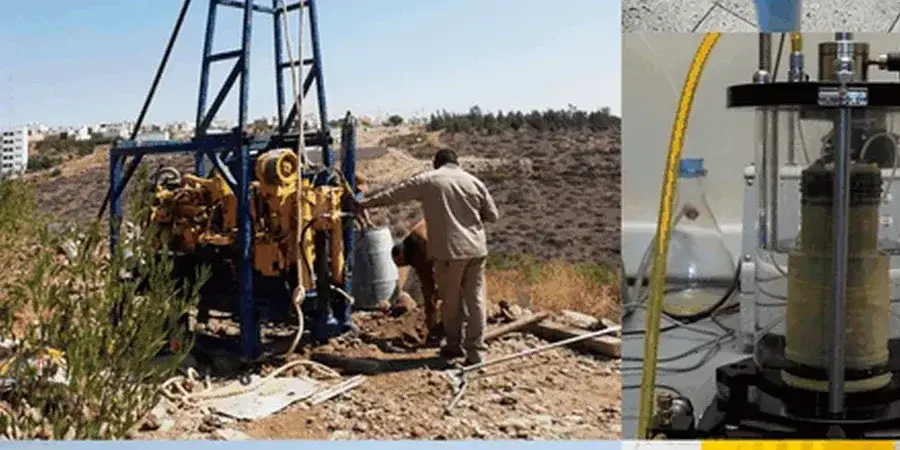
Local geotechnical context
What we observe repeatedly along the Blackpool coast is that untreated loose sands settle abruptly under dynamic loading—even from adjacent piling rigs or compaction plant. Once a site has been stripped and levelled, the top metre of fill can mask a deposit that is dense enough to walk on but collapses under foundation pressure. The biggest risk is differential settlement across the footprint of a structure, especially where the sand thickness varies laterally, which is common near the old buried cliff line running roughly parallel to the promenade. A vibrocompaction design without adequate pre-treatment CPT coverage misses these transitions, and the result is cracking in the superstructure within the first two years of service. Another local concern is vibration propagation toward Victorian-era terraces and listed structures; we include peak particle velocity monitoring in the design specification when working within 30 metres of sensitive buildings.
Relevant standards
BS EN 1997-2:2007 (Eurocode 7 — Ground investigation and testing), BS EN ISO 22476-1 (CPT and CPTU field testing), BS 5930:2015 (Code of practice for ground investigations), BRE Digest 458 (Vibro ground improvement techniques)
Complementary services
Pre-treatment CPT campaign
Cone penetration testing on a 10–15 metre grid to map the baseline relative density and identify zones of silty sand that may require a modified approach.
Test panel design and evaluation
A minimum 4-point trial section executed with variable spacing and energy input; post-treatment CPTs run at 1, 3, and 7 days to assess pore pressure dissipation and density gain.
Production vibrocompaction specification
Detailed method statement defining probe type, frequency range, withdrawal rate, and acceptance criteria tied to cone resistance thresholds per the structural engineer's bearing capacity requirements.
Post-treatment verification and reporting
Full QA/QC package with before-and-after CPT overlays, settlement monitoring data, and a signed design compliance statement for NHBC or Premier Guarantee submission.
Typical parameters
FAQ
What does vibrocompaction design typically cost for a site in Blackpool?
The design package—including pre-treatment CPT, test panel execution, full production specification, and post-treatment verification—ranges from £1.010 to £4.170 depending on site area, depth of treatment, and the number of verification probes required. Smaller residential plots fall toward the lower end, while commercial or multi-storey sites with deeper deposits and tighter performance criteria sit at the higher end.
How long does the vibrocompaction process take from design to completion?
A typical Blackpool residential site of 300–500 m² can be vibro-treated in two to three days of field work, plus one day for pre-treatment CPT and one day for post-treatment verification. The design phase, including test panel analysis, usually adds one week for reporting and specification finalisation. Larger commercial footprints may extend the field programme to two weeks but the design timeline remains similar.
Is vibrocompaction suitable for the silty sands found further inland from the Blackpool seafront?
It depends on the silt content. Once fines exceed 15–20%, the permeability drops enough that excess pore pressure cannot dissipate quickly during vibration, and the densification becomes inefficient. In those conditions we typically recommend stone columns as the primary ground improvement method, or a combined approach where vibrocompaction treats the cleaner sand lenses and stone columns address the siltier zones. A simple wash-sieve test from the borehole samples gives us the answer within 24 hours.