The split spoon sampler drives into Blackpool ground at 30 blows per increment. That is what you hear on site. A 63.5 kg hammer dropping 760 mm, counting every blow. You need that number because Blackpool sits on a complex mix of blown sand, glacial till, and soft alluvium. The borehole log from an SPT tells you exactly what is down there before concrete goes in. We run a tracked rig that fits tight Victorian-era plots off Lytham Road and accesses rear gardens without wrecking the landscaping. BS 5930 governs every test. Our crew logs recovery, moisture, and consistency on the spot. CPT testing can supplement the profile when sands need continuous tip resistance data.
A corrected N60 below 4 in saturated sand at 3 m depth changes the foundation concept entirely. Blackpool sites hit that number more often than clients expect.
Our approach and scope
Local geotechnical context
Blackpool grew fast between 1870 and 1910. The promenade, the Tower, the boarding houses. Builders back then rarely went deep. They spread footings on sand and hoped. Today you cannot hope. The water table sits high, often less than two metres below street level in the central belt. Loose sands, saturated conditions, and a history of shallow fill combine into a risk profile that demands blow count data. We have drilled sites on the cliffs at Bispham where till gives way to sand lenses without warning. Without SPT refusal depths, you overdesign or underdesign. Both cost money. The liquefaction assessment workflow integrates directly with SPT blow counts when the site falls within a zone of potentially fluidised sand.
Video overview
Relevant standards
BS 5930:2015 + A1:2020 - Code of practice for ground investigations, Eurocode 7 (BS EN 1997-1:2004 + UK National Annex), BS EN ISO 22476-3:2005 - SPT and dynamic probing, BS 1377-9:1990 - In-situ tests (historical reference for correlation)
Complementary services
Tracked SPT Boreholes
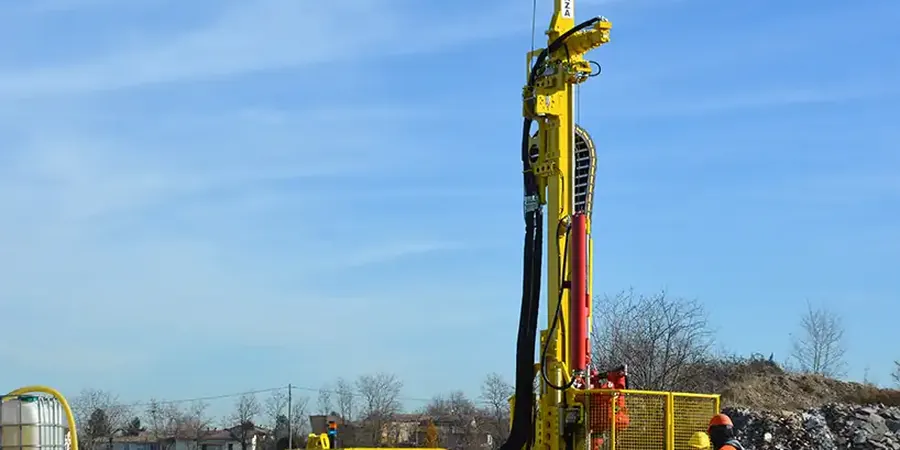
Rubber-tracked rig, 1.2 m wide, fits standard Blackpool side access. We drill to 15 m with hollow stem augers and perform SPT at 1.5 m intervals. Full BS 5930 logging: N-value, soil description, water strike depth.
Foundation Recommendation Report
Raw N-values are not a design. We convert blow counts into allowable bearing pressure, settlement estimates, and pile skin friction where needed, referencing Eurocode 7 design approach 1 for the Fylde ground profile.
Typical parameters
FAQ
How much does an SPT borehole cost in Blackpool?
For a single borehole to 10 m depth with SPT at 1.5 m intervals, budget £390 to £540. The range depends on access, traffic management near the promenade, and whether we dispose of arisings or you handle it. We quote fixed price after a site walk.
How deep do you need to drill for a two-storey extension in Blackpool?
Typically 8 to 10 metres. The key is getting through the loose upper sands and into the denser glacial till that underlies most of the Fylde coast. We stop at refusal or when two consecutive SPT readings exceed 50 blows, whichever comes first.
Can you drill inside an existing building?
Our tracked rig needs 1.2 m clearance width and about 2.4 m headroom. If the building has double doors or a garage opening, we can often work inside. For tighter spaces, we bring a portable dynamic probe rig and correlate results with SPT data from the nearest accessible point.
What is the difference between SPT and CPT for Blackpool sand?
SPT recovers a physical sample. You see the sand, feel it, bag it for the lab. CPT gives a continuous tip resistance profile but no sample. On Blackpool's layered sands, we often recommend SPT as the primary method because the sample lets us identify thin silt layers that a cone might miss. CPT works well as a supplementary profile between boreholes.